
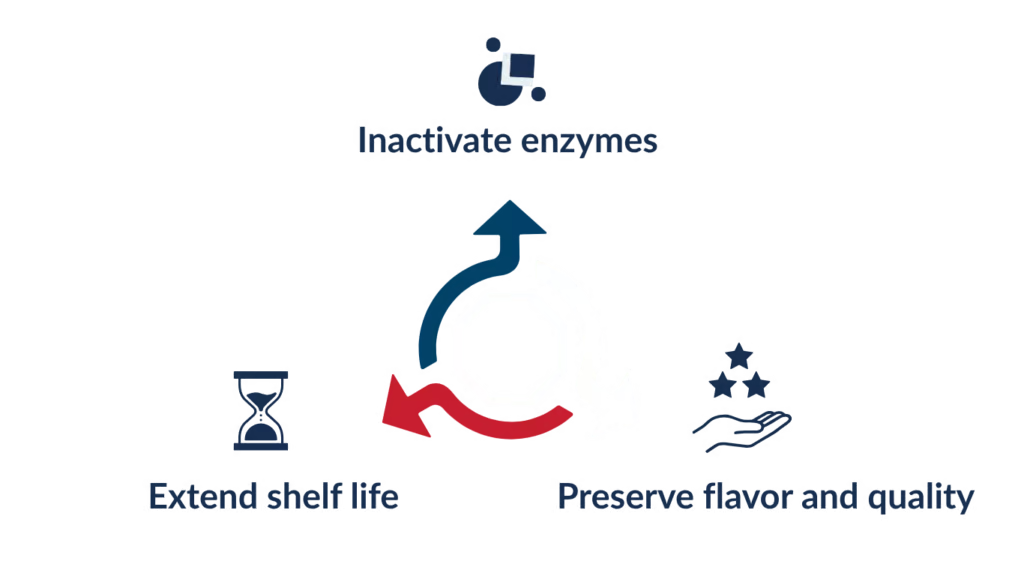
Stabilization is a thermal process used to inactivate the enzymes that naturally degrade dry ingredients after harvest, milling or dehulling. Left active, enzymes such as lipase and lipoxygenase break down fats, generate off-flavors and shorten shelf life. By heating the product under controlled moisture for a precise duration, stabilization stops this enzymatic activity at the source. Revtech’s continuous stabilization technology combines electric heating and direct steam injection in a closed vibratory tower, for homogeneous enzyme inactivation without gas, without open flame and without a separate re-drying step.
Shelf life starts here:
Our stabilization process explained
Why stabilization matters for shelf life and quality
Many grains, brans, seeds and pulses carry highly active enzymes in their outer layers and germ. As long as the kernel is intact, these enzymes stay separated from their substrates. Once the product is milled, cut or dehulled, they come into contact with fats and proteins and start degrading them.
The consequences are well known to processors: hydrolytic rancidity caused by free fatty acid (FFA) formation, oxidative off-notes, bitterness, loss of baking or binding performance, and a shelf life that can drop to a few days for the most sensitive products. Enzyme inactivation is the only way to stop these reactions durably, and it must take place as early as possible in the process.
How enzyme inactivation works
Enzymes are proteins. Heat, and especially moist heat, denatures them irreversibly. This thermal enzyme inactivation, also referred to as enzyme inhibition, enzymatic inhibition or enzymatic deactivation, is the reference method to stabilize dry ingredients. Steam is far more effective than dry hot air for this purpose: it transfers energy quickly to the product surface and brings the moisture needed for denaturation, which allows shorter residence times and lower thermal impact on the product.
Each enzyme has its own heat resistance. Peroxidase is among the most heat-stable enzymes found in cereals and oilseeds, which is why its residual activity is widely used as the reference marker to confirm that less resistant enzymes, such as lipase, have been fully inactivated.
Revtech’s continuous stabilizer
Revtech’s stabilization equipment is a continuous vibratory system designed for precise and reproducible enzyme deactivation of dry ingredients. The product is fed into a vibratory tower, where it is first pre-heated by direct contact with an electrically heated coil. Saturated steam (around 1 bar / 100 °C) is then injected directly onto the product, in a closed and controlled atmosphere.
Four key process parameters are continuously controlled and fully adjustable for every product:
- Flow rate: from 100 kg/h to 6 t/h per line, with parallel lines for higher throughputs
- Temperature: typically between 100 °C and 120 °C for enzyme inactivation, with a technology capable of reaching up to 300 °C when the recipe requires it
- Residence time: precisely controlled, with no dead zones
- Steam injection: amount and conditions adjusted to each product and target enzyme
Every parameter can be saved as a repeatable recipe, so the level of enzyme inactivation stays the same from one production day to the next.
Examples of concrete applications of the stabilization process developed by Revtech
The Revtech continuous stabilizer handles a wide range of dry ingredients, from whole kernels and flakes down to bran and flours. Applications are best described by the enzyme to inactivate.

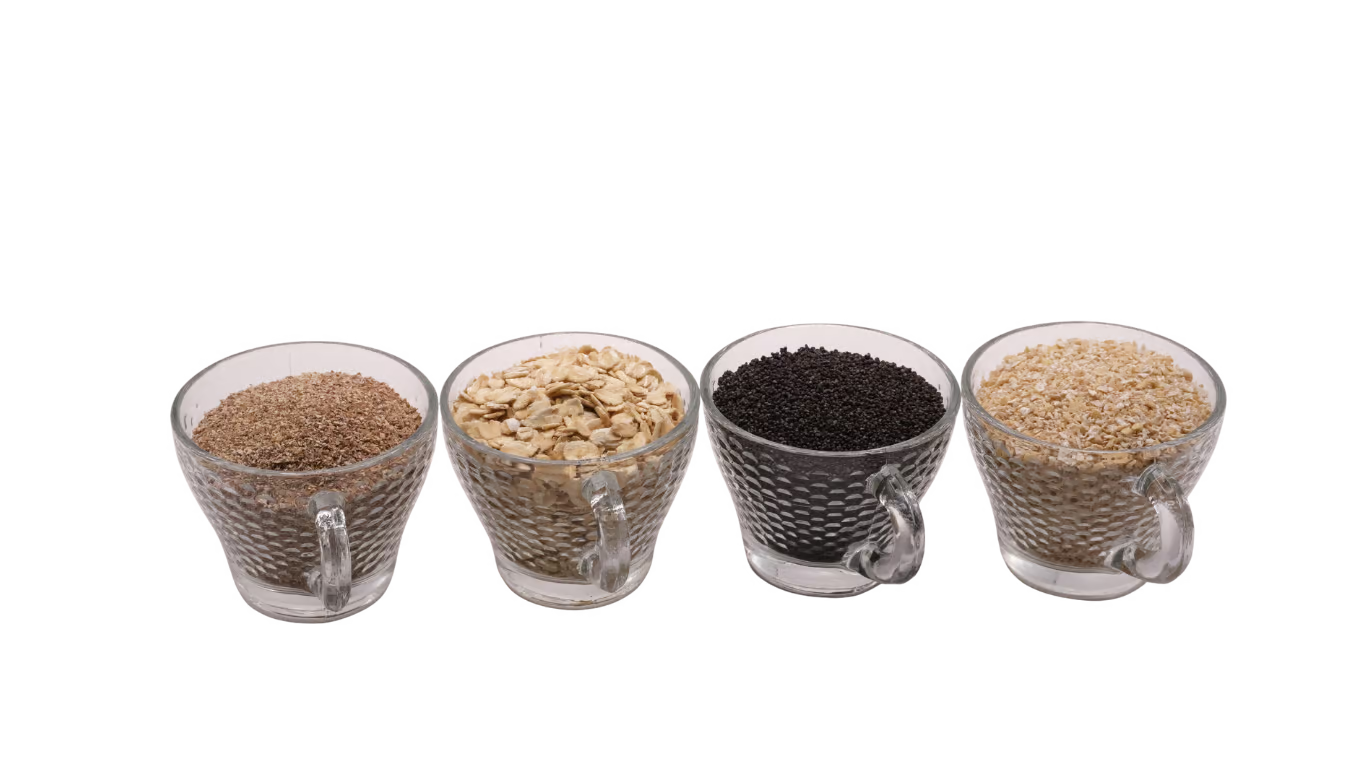
Lipase deactivation: rice bran, oats, whole grains and oilseeds
Lipase is responsible for hydrolytic rancidity: it splits fats into free fatty acids, which cause bitter, soapy off-flavors and fast quality loss. Rice bran is the historical market of stabilization: once separated from the kernel, its lipase starts working immediately, and unstabilized bran quickly becomes unfit for food or edible oil production.
Oats are the other reference application. Revtech’s oat stabilization process raises temperature and moisture in a single continuous pass, so the product can feed the flaker directly, while also achieving a validated 5-log microbial reduction. The same approach applies to corn and wheat germ, degermed corn grits, brown rice, whole grain flours and milling by-products, as well as pseudocereals and minor grains (poppy, quinoa, buckwheat, amaranth, millet, sorghum) whose flours are notoriously unstable. High-fat ingredients such as desiccated coconut, sesame, sunflower, chia, flax and hemp seeds also benefit from lipase deactivation to slow down rancidity.

Lipoxygenase inactivation: pulses and plant proteins
Lipoxygenase (LOX) oxidizes polyunsaturated fats and generates the “beany”, grassy off-notes that limit the use of pulse ingredients in plant-based foods. Inactivating LOX before or right after milling prevents these off-flavors from forming. Revtech’s stabilization process applies to peas and pea protein ingredients, faba beans, lentils, chickpeas, lupin and alfalfa, supporting the deflavoring needs of the fast-growing plant-protein segment.

Myrosinase inactivation: mustard and brassica seeds
When ground mustard seed comes into contact with water, myrosinase converts glucosinolates into allyl isothiocyanate, the compound behind mustard’s pungency. Inactivating myrosinase produces deheated mustard flour, a mild functional ingredient widely used as a binder and emulsifier in meat and sauce applications. The same principle applies to rapeseed, horseradish, watercress and arugula seeds, when pungency must be controlled.
Urease and trypsin inhibitor reduction: soybeans and legumes
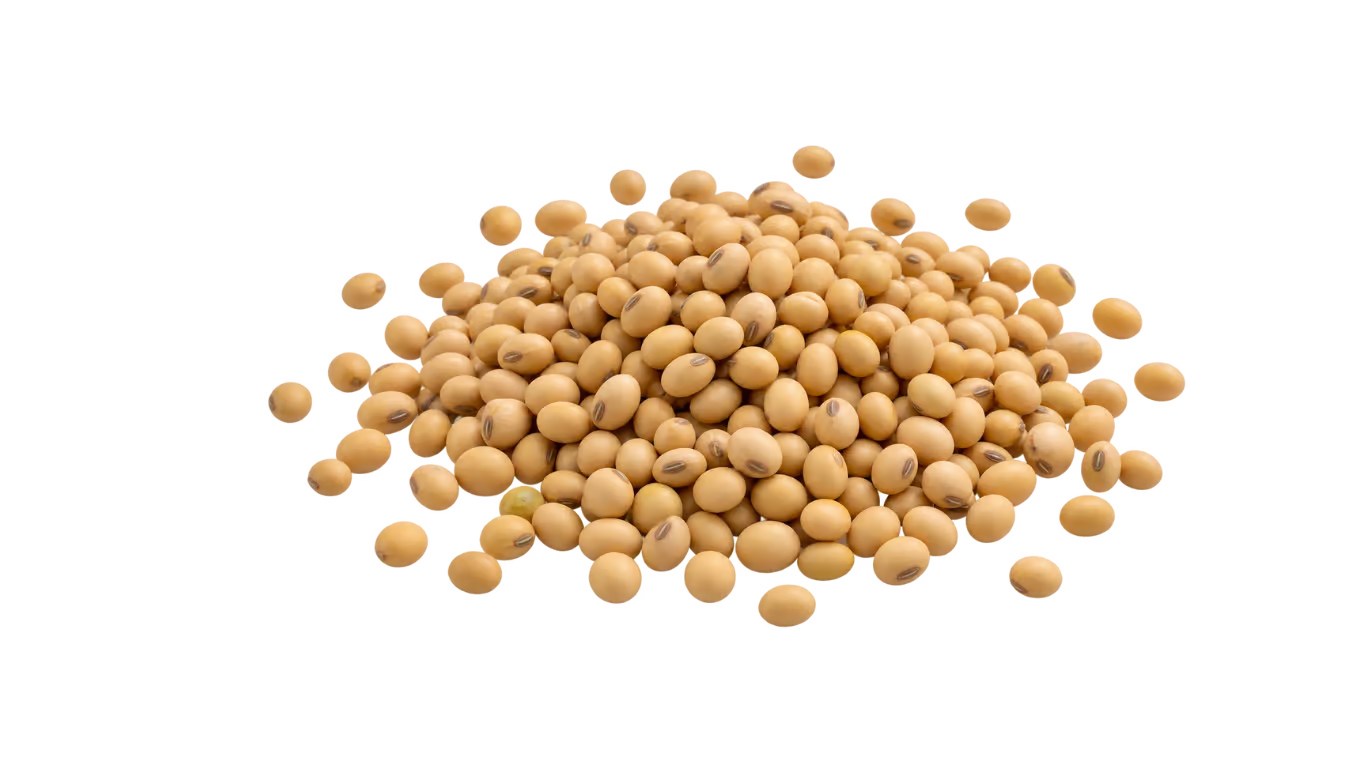
Raw soybeans contain trypsin inhibitors, antinutritional proteins that reduce protein digestibility, as well as urease. Urease activity, measured as the urease index, is the standard industry indicator of whether soy has received sufficient heat treatment. Revtech’s moist-heat process targets both, for soybeans as well as lupin and faba beans.
What is a residual peroxidase activity test?
Measuring lipase activity directly is slow and complex. Because peroxidase is more heat-resistant than lipase and easy to detect, a negative residual peroxidase activity test is the standard way to confirm effective stabilization in cereals such as oats. The test usually relies on a colored reagent applied to the sample: if peroxidase is still active, the enzyme reacts and the sample changes color within minutes, revealing an unstable product. A properly stabilized sample keeps its original color.
Why choose Revtech for your stabilization projects?
Enzyme inactivation and pathogen reduction in one pass: The same continuous steam treatment that deactivates enzymes can also deliver a validated 5-log microbial reduction, removing the need for a separate pasteurization step.
Homogeneous treatment: The plug flow design with no dead zones gives every particle the same thermal history. No under-treated material that would let rancidity restart, no over-treated material that loses flavor or functionality.
No separate re-drying step: Steam is injected in a controlled amount, so the product leaves the tower ready for the next step, such as flaking for oats.
Gentle handling: The vibratory motion moves the product with minimal mechanical stress, preserving flakes, kernels and fragile seeds.
Continuous and scalable: A single line covers from 100 kg/h to 6 t/h, and higher throughputs are reached by adding lines in parallel.
100% electric: No gas supply, no open flame, no combustion gases. A direct contribution to decarbonizing grain and oilseed processing lines.
Easy cleaning: The system can be shut down quickly for cleaning and brought back into production just as easily.
Quick start-up: The system is hot and ready to process product within about 10 minutes, provided steam is available on site. No long warm-up phase before the first ton of the day.
Let’s start our journey together
All about the stabilization process
What is the difference between stabilization and pasteurization?
Stabilization targets enzymes to stop product degradation and extend shelf life. Pasteurization targets microorganisms such as Salmonella and E. coli to contribute to food safety. Both rely on moist heat, and the Revtech process can combine them in a single continuous pass.
How does Revtech’s continuous stabilizer compare to an oat steamer and kiln?
Traditional oat processing relies on an oat steamer followed by a kiln (steaming kiln) to dry and cool the groats, with long residence times and large equipment. Revtech replaces this sequence with one continuous, enclosed tower that heats and steams the product in a few minutes, with recipe-controlled parameters and a direct feed to the flaker.
Is a steam chest enough to inactivate enzymes?
A steam chest brings moisture and heat but offers limited control over residence time distribution, which can leave part of the product under-treated. Revtech’s plug flow design ensures each particle receives the same treatment, which is key to passing a residual peroxidase activity test consistently.
How soon should rice bran be stabilized after milling?
As early as possible. Lipase activity starts as soon as the bran is separated from the kernel, so stabilization is ideally installed in line, directly after the milling step.
Does Revtech have stabilization systems in operation worldwide?
Yes. Revtech stabilization systems are in operation at leading oat producers, at a world leader in the mustard industry, at a major soy processing company and at a large rice bran and flour producer in Europe. These installations are part of more than 200 Revtech systems commissioned worldwide since 1997. Each line is designed around the customer’s product, target enzyme and production capacity. Contact us to discuss references relevant to your application.
What if I can’t find my product on this page?
Contact us to discuss your project.