
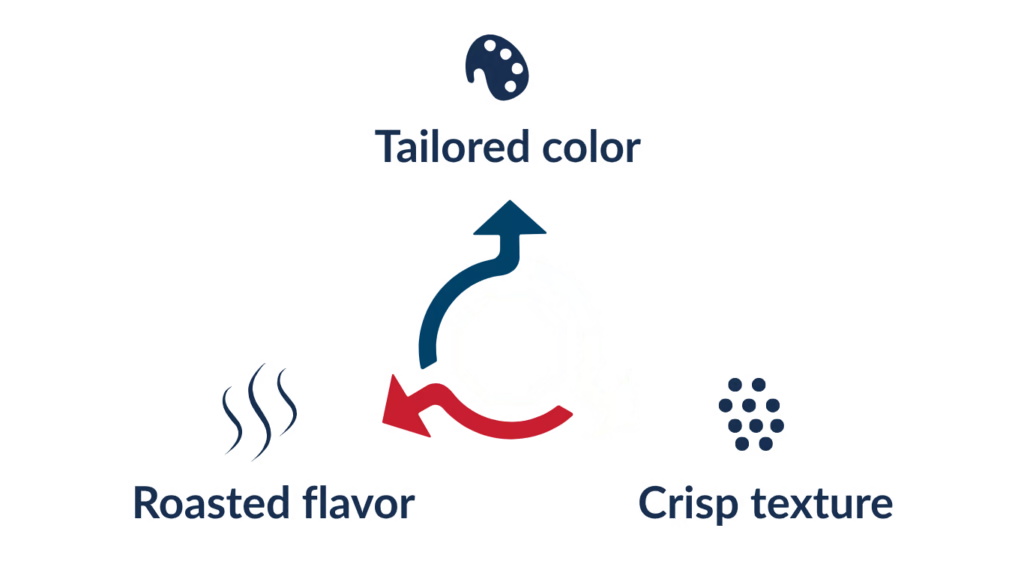
Roasting is a thermal process used to develop color, flavor and texture in dry ingredients. By heating the product at a precise temperature for a controlled duration (both higher and longer than pasteurization) roasting triggers the chemical reactions that turn raw materials into the toasted, aromatic ingredients used since ancient times in food preparation. Revtech's continuous roasting technology brings degree-precise control, fully enclosed atmosphere, and homogeneous treatment to industrial roasting operations, without gas, without open flame, without compromise on product quality.

Flavor starts here:
Our continuous roasting equipment explained

3 purposes of roasting: develop color, flavor and texture

How Industrial Roasting Works

Roasting heats the product at high temperature, typically between 180°C and 300°C, triggering two key chemical reactions: the Maillard reaction, which develops complex toasted aromas and amino acid-based flavors, and caramelization, which transforms sugars into deeper colors and sweet, nutty notes.

The combined effect is threefold:

  • Color: a controlled browning, from light golden to deep dark roast, depending on the recipe and the products
  • Flavor: development of spiceful, toasted, nutty notes, the signature taste of roasted nuts, seeds and grains
  • Texture: enhanced crunchiness and snap in the mouth, with controlled moisture release

Achieving these results consistently, across every batch, every particle, every production day, is what separates industrial-grade roasting from artisanal methods.

Revtech's Continuous Roaster

Revtech’s roaster machine is a continuous vibratory system designed for reproducible, high-precision heat treatment of dry ingredients. The product is fed into a vibratory tower, where it is heated by direct contact with a hot coil (conduction). A controlled amount of hot air can also be injected in direct contact with the product (convection), allowing the system to combine both heat transfer modes within the same line.

The heat treatment tower can be split into independent heating zones, each with its own coil temperature setpoint, enabling complex roasting profiles such as a gentle warm-up followed by a high-temperature finishing zone.

Four key process parameters are continuously controlled and fully adjustable for every product:

  • Flow rate: from 100 kg/h to 3 t/h per line, with multi-line scalability for higher throughputs
  • Temperature: 180°C to 300°C, with ±1°C precision
  • Residence time: precisely controlled and adjustable, with no dead zones
  • Hot air injection: temperature and flow controlled, on-demand


Every parameter can be saved as a repeatable recipe, so operators get the exact same final product every time,  no operator-dependent variability.

Examples of concrete applications of the roasting process developed by Revtech

The Revtech continuous roaster handles a wide range of dry ingredients, from large materials down to flours.

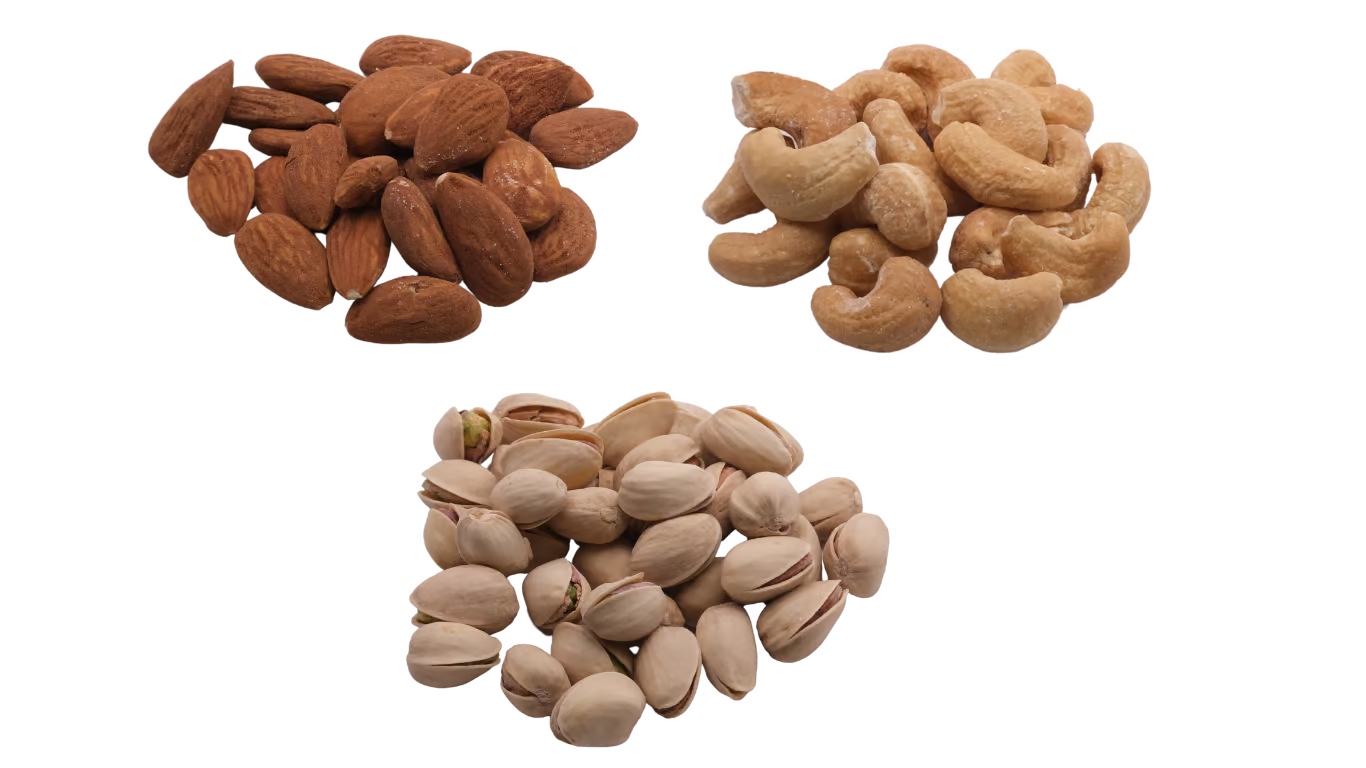
Roasted almonds cashews and pistachios produced with Revtech nut roaster machine

Nuts roasting: the Revtech nut roaster machine

Revtech has developed expertise in the roasting of various nuts, including almonds, cashews, hazelnuts and pistachios. The Revtech nut roaster machine delivers uniform browning across the entire batch while preserving fragile items like cashew halves and sliced almonds thanks to a gentle vibratory motion. Roasting develops the deeper toasted color, the signature nutty aroma and the crisp bite that define premium retail nuts, three attributes that drive shelf price in snacking and confectionery markets. Today, Revtech-roasted nuts feed the full snacking and food processing value chain: roasted-and-salted retail packs, trail mixes, nut butters, chocolate inclusions, cereal bars, granolas, bakery and confectionery products.
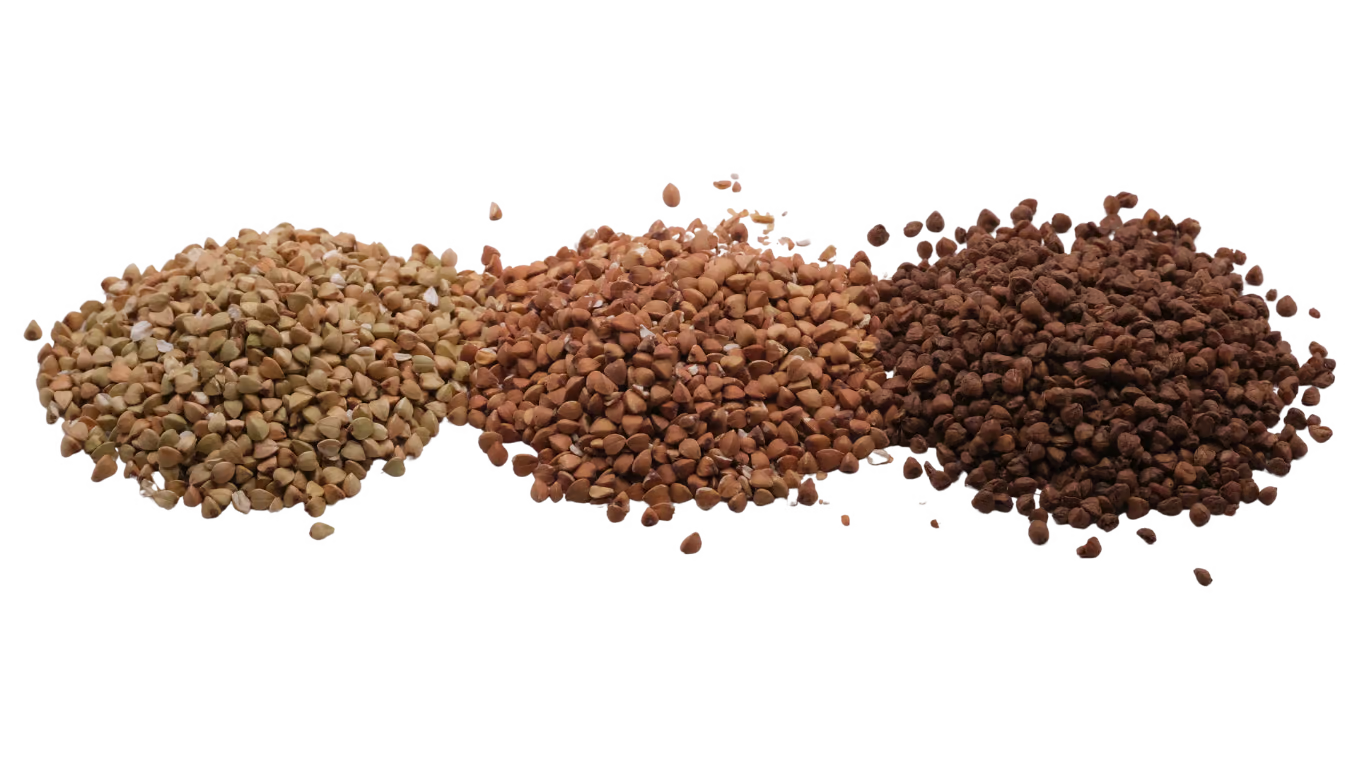
Raw light and dark roast of buckwheat

Seeds roasting

Beyond nuts, Revtech has also experienced growing demand for the roasting of seeds such as sesame, quinoa, sunflower, chia, hemp seeds, linseeds and pumpkin seeds. Roasting develops the deep aromatic profile characteristic of toasted sesame, highly valued on Asian and Middle Eastern markets, while increasing crunchiness, improving digestibility and releasing the natural oils that carry flavor. Revtech-roasted seeds feed a wide range of applications: toppings for bowls and salads, tahini and halva, breads and crackers, granolas and toasted seed oils.

Different roasting levels of barley

Grain roaster machine

Grains such as malt, wheat, barley, oats and buckwheat are also commonly roasted, mainly to serve the malting and brewing industry. The process requires the ability to develop a wide range of colors and flavor profiles, from pale toasted notes to deep chocolate and coffee tones, to answer the demand of large breweries as well as craft maltsters. Both fit well: the Revtech grain roaster machine develops custom roasting recipes across small pilot batches and full industrial throughputs, delivering the same precision on a 100 kg test run as on a 3 t/h production line.

Roasted cumin seeds with deep aromatic profile

Spices roasting

Herbs and spices such as cumin, coriander, black pepper, fennel, anise, fenugreek, cardamom, clove and chili peppers are also commonly roasted before grinding and blending. Roasting develops the deep aromatic profile that defines premium spice blends, from Indian garam masala and Middle Eastern za'atar to Mexican chili powders and North African ras el hanout, by unlocking the essential oils responsible for flavor and pungency. Revtech's degree-precise control protects these highly volatile aromatic compounds from over-treatment, preserving the essential oils that define spice quality and premium pricing. Revtech-roasted herbs and spices feed the full seasoning value chain: retail spice blends, industrial seasonings for snacks and ready meals, marinades and rubs, sauces and condiments, ethnic cuisine ingredients.
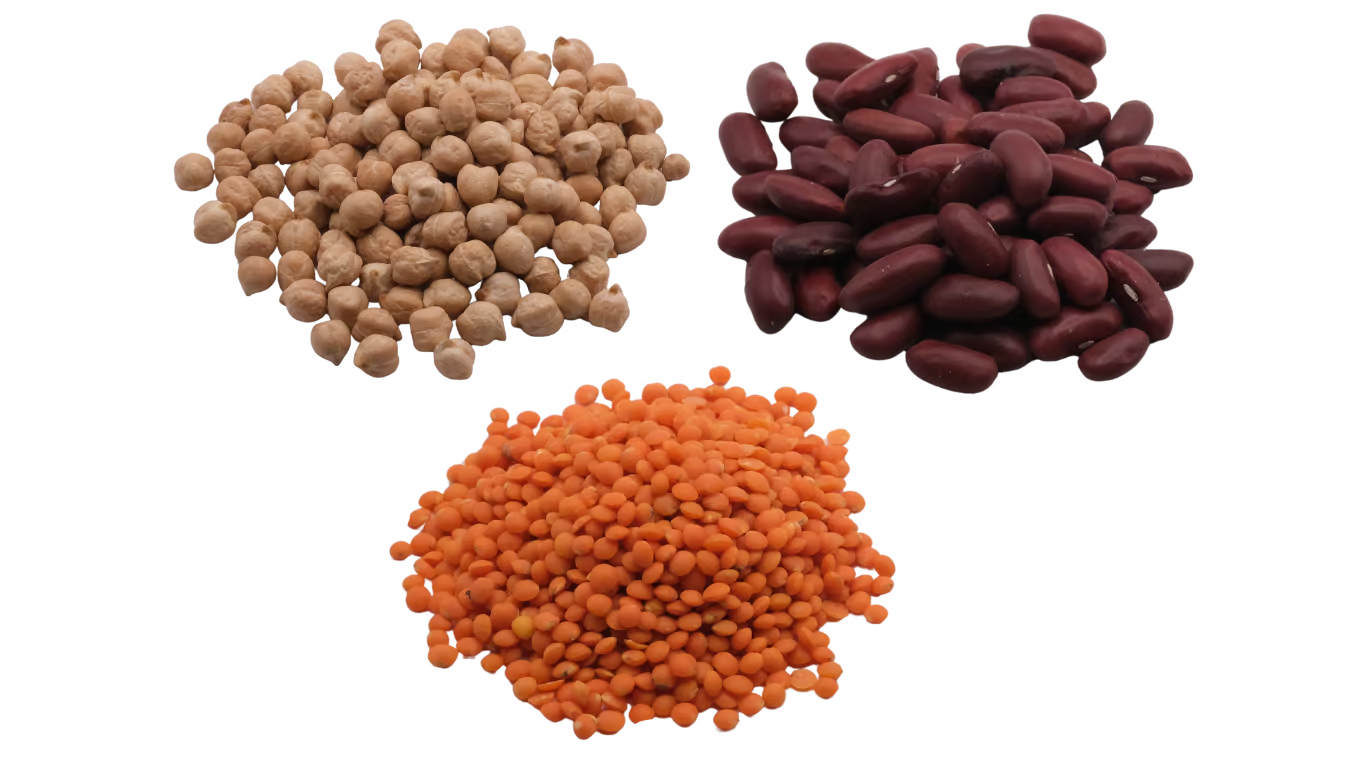
Roasted chickpeas beans and lentils

Pulses

Pulses such as chickpeas, fava beans, lentils, split peas, lupin and soybeans are increasingly roasted to serve the fast-growing plant-based and high-protein snacking markets. Roasting develops a rich nutty flavor, deep golden color and satisfying crunch that turn a bland raw legume into a premium finished ingredient, while also improving digestibility and reducing anti-nutritional factors. Revtech-roasted pulses feed a wide range of applications: crunchy salted snacks (roasted chickpeas, roasted fava beans, edamame-style soybeans), protein-enriched flours for bakery and pasta, plant-based toppings for bowls and salads, and inclusions for cereal bars and granolas.

Green medium and dark roasted coffee beans

Cocoa and coffee

Cocoa nibs and coffee beans share the same roasting chemistry as nuts and grains but face a specific industrial reality: their processing lines are still overwhelmingly powered by natural gas. Revtech offers a 100% electric alternative that develops the same signature chocolate and coffee aromatic profiles, with degree-precise control over the roasting curve and full recipe reproducibility from light to dark roasts. For cocoa manufacturers and coffee roasters committed to decarbonizing their operations, the technology removes the gas supply, the open flame and the combustion emissions in a single move, while remaining fully compatible with renewable electricity contracts. A direct answer to the climate commitments now shaping the cocoa and coffee industries.

Why choose Revtech for industrial roasting?

Revtech’s continuous roasting system combines technical precision with operational benefits that traditional ovens, belt roasters and vibrofluidized beds struggle to match:

Homogeneous treatment, every particle, every time
The plug flow design with no dead zones ensures every particle goes through identical thermal history. The result: uniform color, uniform flavor, and no over-treated or under-treated material at the exit.

Gentle handling for fragile ingredients
Unlike belt roasters or fluidized bed systems that can cause breakage and dust generation on delicate products, Revtech’s controlled vibratory motion moves the product forward through the tower with minimal mechanical stress. This gentle handling is critical for high-value fragile ingredients — cashew halves, sliced almonds, thin flakes, delicate seeds — where visual integrity and low breakage rates directly drive product value.

Degree-precise control
Real-time coil regulation holds setpoints within ±1 °C throughout the run, letting you maximize Maillard, Strecker and caramelization reactions while staying safely below regulatory acrylamide thresholds. A level of process control that belt roasters and rotary drums cannot match.

Continuous operation, scalable capacity
A single line processes 100 kg/h to 3 t/h depending on product and recipe. Higher throughputs are achieved by adding parallel lines.

Inherently safer than gas-fired alternatives
100% electric heating means no gas supply, no open flame, no combustion gases. Fire risk is dramatically lower compared to direct-fired ovens and gas-heated belt roasters — especially relevant for high-oil products such as nuts.

Sustainable and low-carbon
Electric operation enables decarbonization of roasting lines, with full compatibility with renewable energy sources. A direct alternative to gas-fired industrial roasting in line with food industry climate commitments.

Versatile across products and processes
The same machine can be configured for light roasting, dark roasting, or pasteurization-only operation, depending on the recipe. One platform, multiple applications.

Ready to develop your industrial roasting recipe? Test it at our pilot plant.

Every roasting application is unique. Our industrial pilot plant in Loriol-sur-Drôme, France, is fully equipped to characterize your product, optimize your roasting recipe, and demonstrate Revtech’s performance on your specific material — before any commitment to a full-scale line.

All about the roasting process

Yes, and this dual functionality is one of the key advantages of the technology. For light roasts, a small amount of steam is injected during the process to achieve a validated 5-log reduction in microbial load. For dark roasts, the enclosed environment combined with the natural steam released from the product, the plug flow design and the absence of dead zones is sufficient to reach a 5-log reduction with no external steam injection. Traditional ovens, belt roasters and vibrofluidized systems typically require a separate pasteurization step. Revtech does not.

The technology eliminates the most common ignition sources found in traditional roasting: no gas supply, no open flame, no combustion atmosphere. Heating is delivered by direct contact with electrically heated coils, under continuous real-time temperature monitoring. The enclosed atmosphere limits oxygen availability when needed, further reducing risk on high-oil products such as nuts and oilseeds.

The technology handles a wide range of dry ingredients across particle sizes: nuts (almonds, cashews, hazelnuts, pistachios, peanuts), seeds (sesame, sunflower, pumpkin, flax), grains (malt, oats, buckwheat), spices (coriander, cumin, fennel), pulses, and even flours. Feasibility trials at our industrial pilot plant in France allow precise characterization for any new product before committing to a full-scale installation.

A single Revtech line processes between 100 kg/h and 3 t/h, depending on the product, target roasting degree and residence time. For higher production capacities, multiple lines run in parallel, a more flexible and scalable approach than oversizing a single machine.

Continuous operation removes the downtime between loads that limits batch systems, delivering constant throughput and recipe reproducibility from the first ton of the day to the last. The plug flow design ensures every particle follows an identical thermal history, whereas batch roasters expose product at the edges to different conditions than product at the core, which drives batch-to-batch variability on color and flavor. On top of process consistency, continuous roasting cuts energy waste on repeated heat-up cycles and reduces operator-dependent variability, two significant OPEX levers on high-volume production lines.

Yes, and this is one of the primary use cases of the technology. The gentle vibratory motion preserves visual integrity on fragile items like cashew halves, sliced almonds and pistachio kernels, keeping breakage rates low on high-value SKUs where appearance drives shelf price. Combined with the dual roasting-and-pasteurization capability, which delivers a validated 5-log microbial reduction in a single pass, the technology meets the food-safety standards imposed by the Almond Board of California and applied worldwide by leading nut processors on premium retail lines.

Secret Link